Friday, 17 May 2013

An Edge Too Far? – by Guest Author Cathy MacPhail

This week we are delighted to welcome best-selling author Cathy MacPhail as our guest at The Edge …

A boy witnesses a man tumbling to his death from the top of a tower block, and landing with a Splat!

This is how my next book, Mosi’s War begins. Well, you’ve got to hook them from the beginning, haven’t you? 

From then on there are machete fights, riots, murder, a bit of slicing and dicing, cannibalism … oh, and a vampire … did I mention a vampire? All in the name of gritty realism.


But this is a book about a young African asylum seeker who harbours a terrible secret, and who then sees, right there in the Glasgow estate where he lives, someone from his past, someone who terrifies him. So in order for it to be truthful, it had to be violent.

But that’s the dilemma about writing young adult fiction, especially when, like me, you write for the younger adult age group. 

Just how truthful, how graphic, should you be?

I know there is a debate at the moment about just what subjects you can tackle in young adult fiction. And the answer seems to be, you can tackle anything you want, it is the way you handle the subject that matters.

You want your book to be as honest as possible, but you also want your book to be accessible not only for the age group you’re writing for, but also acceptable for teachers, parents and librarians too.

Personally, I look at it is as a challenge to be overcome, rather than a problem that has to be faced. 

I think there are always ways to get round it. For instance, we all know a lot of children swear, but I wouldn’t get away with a load of swear words in my books, nor would I want to. And after all, if you were adapting your book for children’s television you wouldn’t be allowed swear words. The challenge is to depict your characters’ dialogue honestly without using any actual swear words in your story.

Overcoming that challenge is something I enjoy. We know dark things can go on in a young person’s life, but we can hint at it, without being too specific or graphic. What you leave out can be as important as what you put in.

I’ve been lucky, from the beginning I have written about dark subjects, and I have never had anyone say, that’s too dark, cut it out. In Grass, a boy witnesses a gangster blast the life out of another gangster and I’ve read that scene out at schools, even primary schools and you can hear a pin drop when I do, and never once has a teacher told me it was too graphic.


I wrote Roxy’s Baby after hearing a report on radio about a girl who had come to this country and then found out she was pregnant. People offered to look after her and she thought they were being kind. When the baby was born they told her the baby had died. Only later did she find out the horrific truth. The baby had been sold on for its organs. I had never heard anything so horrific. I knew I wanted to write that book, but how could I possibly write a book about such a horrific subject when I write for such a young market. How could I make this book accessible to my readers, and still be honest? Then I realised I could put a young girl, perhaps 14, into my story, and at fourteen I would never suspect such a horrendous truth. My fourteen year old imagination’s worst nightmare would be that they were witches, and wanted my baby for some kind of blood sacrifice, and so Roxy never finds out the truth till the very end, and neither do the readers. And once again, I have never been told at any high school not to talk about Roxy’s Baby.


So I think there are always ways round any topic, no matter how dark and edgy and gritty. Put a young person in there and see it through their eyes, see how they would deal with it at their age.

I’m so glad I was allowed the violence and blood that there is in Mosi’s War. It’s a book about a boy soldier, and the terrible things he has had to do to survive. It had to be gritty. But it’s also a book about a boy, who has had his childhood taken away from him, who has lost his belief in everything, and who, in the end, gets his faith back.

And that was the only thing I wasn’t allowed to mention … God.

It seems He was an edge too far.

-------------------------------------- 

For more information visit Cathy's website and blog.
Follow her on Twitter @CathyMacphail

Friday, 3 May 2013

Genre Juggling


Edge author Katie Dale asks 

"Can you and should you juggle genres?"


I was extremely lucky to get a two-book publishing deal for my first YA novels, but now I’ve fulfilled that contract I felt unsure what to start next. With no set deadline before me, I felt in a sense free to write whatever I liked, a prospect which was at once delicious, yet a little daunting. What should the next project be? Should I knuckle down straight away on another YA novel to try to keep up the momentum of a YA book a year? Or should I use this opportunity to stretch my writing muscles in another genre – Middle grade? Picture books, even?

Of course, I don’t want to alienate my YA readers, some of whom have already contacted me, impatient for the next book, which is incredibly lovely, and part of me feels it would be silly to start writing in another genre when I’ve been lucky enough to have two YA books published. Most authors stick mainly to one genre, right? That way you build your author “brand”, try to develop a following of readers who expect a certain kind of book when they see your name on the cover. It makes sense.

But…while I absolutely adore writing contemporary YA fiction, I find there are other stories and styles that sometimes I’m just itching to write! In the same way that I like to read a variety of genres, I also like to write in different genres too, to express different elements of my personality. My first publication deal was not for YA after all, but a series of rhyming books for 5-8 year-olds. While I was preparing and editing my first novel for submissions, I was also intermittently looking up rhymes for “Witch” (LOADS!) or “Wolf” (there are absolutely none!) and I found it incredibly refreshing to switch from one to the other – they were so completely different, it was like taking a break.
Likewise, I was approached to submit a short story for an anthology entitled How To Be A Boy – “How could I write a story about how to be a boy when I’m a girl?,” I thought. “I have no experience of being a boy!” But by giving it a go, by branching out, experimenting and leaving my comfort zone I found a whole new “voice” and actually really enjoyed it. It exercised my creativity, and I found it refreshed my writing.

There are authors, of course, who manage to juggle genres  beautifully. Sara Grant recently simultaneously launched her next YA novel “Half Lives” and her “Magic Trix” series for 7-9 year-olds; Eoin Colfer writes for 5 year-olds up to 16 year-olds; JK Rowling decided to switch to writing adult books after Harry Potter, whilst John Grisham conversely started writing teen, and Ian Fleming wrote both James Bond and Chitty Chitty Bang Bang.

Likewise, I'd like to continue writing YA, but I'd like to branch out a bit as well - but is this like wanting to have my cake and eat it too?

What do you think? Are authors better off sticking to one genre? 
Would you find it confusing or alienating as a reader if your favourite author suddenly started writing in a different genre or for a different age group? 
Or do you think it’s good for authors to diversify?
If so, do you think they should use different names for different genres? 

Katie Dale is the author of YA novels SOMEONE ELSE'S LIFE and LITTLE WHITE LIES (Simon & Schuster) and the FAIRY TALE TWISTS series (Orchard Books)

Friday, 19 April 2013

YA INTERROGATION WITH GUEST BLOGGER, VIVIENNE DACOSTA

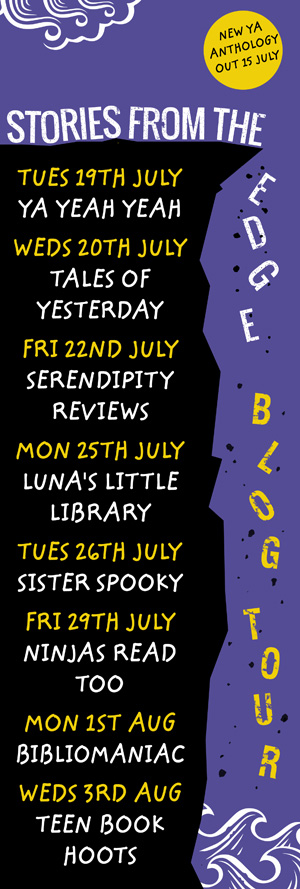
This week, The Edge Writers are delighted to introduce YA book blogger Vivienne from Serendipity Reviews blog.
Hi everyone. Thank you Savita for inviting me onto The Edge. I have enjoyed featuring many of you on my own blog, so it is lovely to be able to return the favour.
1.      Viv, why do you READ and WRITE about teen/YA books?
That's an easy one. I read and write about  teen books because I simply love them. From the moment I read Twilight, I fell in love with YA. The books are normally fast paced and you are completely engulfed in the story by the end of the first chapter. YA books are about telling a damn good story, not trying to write the fanciest sentences. I don't want to spend hours trying to work out what the author is getting at - I want to embrace the main characters and delve into their lives.
2.      What are the most ORIGINAL YA books that you have read?
Oh crikey that is a hard one. I had to search back through hundreds of books and came back to a recent book I read that bowled me over. Ferryman by Claire McFall is definitely one of kind. I don't think I have ever read an after life story that has touched me so much. The idea of a Ferryman taking you to Heaven I know is an old idea, but the way Claire wrote it just took my breath away. Her writing alone, shows an originality in her voice, to the point, I feel I could spot her writing without her name attached to it.
3.      What is a TURN OFF in YA fiction?
Instant love. I imagine a lot of people have said this but it really is annoying and can easily turn me off a book. I know teenagers fall in and out of love a lot easier than adults, but they don't fall within seconds of meeting each other. In the last year or so, there has definitely been a move away from this type of story. The characters  falling in love lately have known each other most of their lives which makes it so much more believable.
4.      What makes for a great YA book?
Strong, identifiable characters. Fast paced plot. A first chapter with so many hooks I am practically trembling with excitement by the end of it. Lack of adults.
5.      Which YA characters would you most like to take OUT TO DINNER and why?
The Vincent Boys by Abbi Glines. In particular Beau! I fell in love with him from the first chapter. But then Abbi writes the most awesome male characters. He would be the eye candy for the dinner party.
Caelena from Throne of Glass by Sarah J. Maas. She is one of the strongest female characters I have ever come across and I know I could learn a lot about self defence from her.
Mary Shelley Black from In The Shadow of the Blackbirds by Cat Winters as she is one of the most interesting and quirky characters I have ever met. I just know we would be best friends.
The four horsemen of the Apocalypse from Barry Hutchison's hilarious book The 13th Horseman. They are so funny, I'm sure they would have great stories to tell around the dinner table. Their quick witted banter would keep the rest of the table entertained.
6.      Who is your ideal YA HERO/HEROINE and why?
Caelena from the Throne of Glass by Sarah J. Maas. As I said above, she is the strongest female character I have ever met, stronger than Katniss from The Hunger Games. She is only young yet she can fight better than Lara Croft and has survived torture.

7.      What is your dream YA ROMANTIC PAIRING and why?
Lila and Alex from Sarah Alderson's Hunting Lila. I loved the chemistry between these two, they just set the book alight. I loved how feisty Lia was and the way Alex was so determined to protect her.
8.      What makes you uncomfortable or question the BOUNDARIES OF YA fiction?
I struggle with YA books that deal with child abuse. I think that comes from being a mum; any stories involving any sexual or violent abuse upset me and I find them really uncomfortable. I also struggle with incest. I still haven't been able to read Forbidden by Tabitha Suzuma and ended up writing a post about it. That definitely stems from being a mum, as in my younger years I fell in love with Flowers In The Attic by Virginia Andrews.
9.      What would you LIKE to see happening in YA over the next five years?
I would like to see books have longer shelf lives. Within YA, there are so many books out there that it feels like many get lost in the stampede of new books and never get the attention they deserve. I want to walk into a book shop and see older YA still available not just the latest books out that month.
I would also like to see more UKYA, perhaps set in smaller towns and villages around the UK. We have some amazing and historical places of interest that deserve to have their stories told through YA, creating such interest that teens would actually want to visit them.
10.   What do you think will ACTUALLY be the next big thing in YA ficton?
That's an interesting question because at the moment, New Adult contemporary books are taking over the internet, but I'm not sure they have filtered down to the general public. I think book bloggers and tweeters see trends erupting long before they reach the book buyers. So New Adult is definitely about to storm the country. Followed closely by New Adult fantasy books which is practically non existent at the moment. I know NA is not YA, but I can guarantee a lot of teenagers will be reading them.
There is definitely a move away from paranormal books. I think angels and vampires have had their time in the spotlight for awhile and contemporary thrillers are stealing the limelight.
Give us your top FIVE TEEN/YA books please, Viv.
This is really hard. So I am going to go with my Top five out of the books I have read this year. I have to do it on a yearly basis because there are just too many amazing books.
From What I Remember by Stacey Kramer and Valerie Thomas
Ferryman by Claire McFall
The Quietness by Alison Rattle
In The Shadow of Blackbirds by Cat Winters
Hidden Among Us by Katy Moran
And finally, Viv, if you read ONE book this year, read THIS...
Undone by Cat Clarke. It will destroy you. *passes hankies* Cat is an amazing storyteller and can write such emotional and realistic scenes.

Viv, thanks so much for submitting to the EDGE INTERROGATION!
Thanks for the torture! These were the hardest questions I have ever had to answer.

If you’d like to read more of Viv’s reviews, you can find her here: www.serendipityreviews.co.uk

And you can follow her on twitter @Serendipity_Viv


Thursday, 11 April 2013

Series Fiction, by Bryony Pearce


I read a novel in around two hours.  This was a huge help in my English Literature degree, but it also means that a) my house is groaning with books b) my bank manager hates me c) if I’ve come to love a character, I feel as if my time with them is over too quickly.
There are some authors who write books that I will literally finish the last page of, then turn back to page one and start reading again (most notably Terry Pratchett, Jenny Crusie, Janet Evanovich, Anne Macaffrey, David Gemmell and JR Ward), just so I can remain in their worlds for longer.
Basically if I’ve come to love a character I want their story to go on, and on.
That is why I love series fiction.  It enables me to stay with my favourite characters for years, learning new things about them, keeping up with their adventures, seeing their arcs grow and grow.


This also holds true for the characters I create myself.  I love them and I want their stories to go on.  In my head I know what happens next to Cassie, Seth and Pandra from Angel’s Fury.  I have a rather kick ass sequel planned out.  
It won’t get written.  
Angel’s Fury was a one book deal and hasn’t sold nearly enough to warrant a sequel.  The only way I might consider writing that sequel is if I develop enough spine to self-publish.  It’s a very, very remote possibility.
My new book The Weight of Souls is also a one book deal with the synopsis for the sequel written out and ready to go.  Again, I have to wait for book sales to find out if I should be working on it.
It seems I tend to envisage series but sell books one at a time.
I imagine that frustrates some of my audience.  But at least if a writer makes a one book deal they can wrap up the ending of the first book, just in case.  It’s a much better scenario than the one I’ve been hearing about recently where a number of authors have had third books in trilogies cancelled due to poor sales of the first two. 
As a reader that would make me livid.  I’d be banging down the door of the author’s house wanting to know what happened next.  I understand the need for publishers to make money, but do they also have a responsibility to make sure that a story embarked upon, gets finished? Surely publishing the first book in a series represents an implied contract with the reader that the other books will come out.
And that is the problem with series fiction, that the story might never get finished.  I started reading Game of Thrones when it first came out, in the mid-nineties.  By the time I’d finished reading A Storm of Swords part II and waited for the next book in the series (five years) I’d forgotten what had happened in book one and moved on.  I gave up on The Wheel of Time when, after eleven books, Robert Jordan died leaving the last tome unwritten.  David Gemmell died two books into his Troy trilogy.  Both of these authors had their series finished by other people, but I’m unwilling to read these books in case the writers didn’t do the job I wanted them to do.
Gratuitous Nathon Fillion image
I love series fiction, but it has its downsides, especially  when publishers are beginning to cancel series with the axe-wielding aplomb of the Fox Network.  I will no longer embark on a new US TV series until I've heard that all episodes in the first season have been made and preferably that a second has been commissioned.  There’s nothing more annoying than getting involved in something and finding out that it has been cancelled (Firefly, Last Resort etc.). I seriously hope publishers don’t go the same way.  Otherwise I will be in the same position, refusing to buy book one of a trilogy until book three has been published.  
But that’s a vicious circle, if publishers start backing out on their implied contracts with their readers, the readers will start holding off and won’t buy books until they are guaranteed a completed contract (i.e. they have seen book three already on the shelves).  But if the readers don’t buy book one, because they are waiting for book three, then publishers will mark book one off as having bad sales and the sequels won’t get written at all.
It’s a problem.  
The only thing that readers can do for authors is believe.  Pitch into a series, read it regardless of the idea that it might never make it to the end of the story and if necessary fill in the ending themselves. 

Thursday, 4 April 2013

YA INTERROGATION WITH GUEST BLOGGER, JIM DEAN.

This week, we’re delighted to introduce Jim Dean from YAYeahYeah. Jim blogs and writes reviews about teen/YA books, and he's agreed to take part in the Edge Interrogation! Over to you, Jim.
Hi, I’m a maths teacher (sorry!) who loves writing and reading, and has previously edited a school magazine. I’ve been book blogging since December 2010, but got my start in book reviewing when the lovely people who run The Bookbag (www.thebookbag.co.uk) accepted my e-mail application to become a reviewer. A few hundred books later, I think it’s safe to say that’s probably the most important e-mail I’ve ever sent anyone!
1.    Jim, why do you READ and WRITE about teen/YA books?
As a teacher, I really like reading books that the people I teach are likely to enjoy. As a reader, I think the years in which teens are growing up are absolutely fascinating to read about. And as a blogger, I get so excited about the sheer number of incredibly good YA authors out there that it's brilliant to share my love of these books with other readers.
2.    What are the most ORIGINAL YA books that you have read?
My standard answer when it comes to originality is Jaclyn Moriarty's Ashbury/Brookfield novels. Told in a huge amount of different ways, featuring everything from notes on fridge doors to answers to exam questions, JM is a thrillingly inventive author who manages to write superb novels using her own unique style. Adding to that, I'll throw in Laura Lam's Pantomime, a classy fantasy which deals with issues which are rarely seen in any YA books with real grace.
3.    What is a TURN OFF in YA fiction?
Nothing, when's it done well! Having said that, love triangles, insta-love, and 'sexy' scenes are some of the things that I think quite often AREN'T done particularly well, so my heart tends to sink just a tiny bit on seeing them.
4.    What makes for a great YA book?
For me, great characters beat everything else out, with a strong voice being a must if it's written in first-person as well. Plot, setting, and writing style play an important part for me to, but it's believable characters who develop well throughout the book which are the one thing that will definitely hook me.
5.    Which YA characters would you most like to take OUT TO DINNER and why?
Most main characters are too young for me, so I'd go for one of a pair of wonderful supporting characters - either Annabel, from Geek Girl by Holly Smale or Stepmama from Stephanie Burgis's superb Kat Stephenson series. Both of these ladies are brilliant characters who I'd love to meet.
6.   Who is your ideal YA HERO/HEROINE and why?
I'm probably pushing the boundaries of YA by mentioning Stephanie Burgis's Kat Stephenson series once, let alone twice, but I'm going to name Kat for this answer anyway because she's a simply stunning heroine - loyal, brave, feisty and just generally incredibly cool. Favourite hero is significantly harder to pick, but having just raced through Department 19: Battle Lines in an afternoon, I'll say that vampire hunter Jamie Carpenter is probably my answer for at least the next hour. (Although as I’m about to pick up LIGHT by Michael Grant, there’s a fair chance that by the end of that book one of the teens from the FAYZ may have grabbed top spot, as it has so many brilliant heroes!)
7.   What is your dream YA ROMANTIC PAIRING and why?
Tempted to go with Department 19 again, with the partnership of Jamie and vampire Larissa being one of my favourites for ages. I'd also consider several couples from some of last year's wonderful YA contemporary releases - Skin Deep by Laura Jarratt had Jenna, disfigured in a car crash, and New Age traveler Ryan, while Pushing The Limits by Katie McGarry was a stunning romance between damaged teens Echo and Noah. If I had to pick just one, though, Lucy and Ed from Cath Crowley's Graffiti Moon would take first place because they're fantastic individual characters - Lucy is smart, feisty, and really likeable, while Ed is a brilliant artist and a seriously great guy - and the chemistry between them is so hot I was half expecting my book to catch fire as I read it.
8.  What makes you uncomfortable or question the BOUNDARIES OF YA fiction?
There's actually very little that makes me uncomfortable, to be honest - the only thing that springs to mind is one I read in which a group of teens got away with rape with little consequences.
9.   What would you LIKE to see happening in YA over the next five years?
More dual narratives, because I love them! More brilliant fantasy which deals with real issues - I'm thinking things like Laura Lam's Pantomime, as mentioned above, Celine Kiernan's outstanding Moorehawke trilogy, and Curtis Jobling's wonderful Wereworld novels. And more of the Monstrumologist, because I have a horrible feeling that I've read somewhere Rick Yancey's next book will complete the series, and I really don't want to see it end.
10.   What do you think will ACTUALLY be the next big thing in YA fiction?
 Will Hill's Department 19: Battle Lines is (as I write this) just about to hit the shops, and I think the brilliance of that series, which builds on Stoker's Dracula with some stunning world-building and great characters, might inspire a fair few similar novels. I think it's great to see books like these - and Andy Briggs's superb Tarzan reboot - which look back at classic literature. I also think there's going to be a lot more paranormal books (nothing new there) but can see them moving away from romance and into more chilling territory.

Give us your top FIVE TEEN/YA books please, Jim.
Oh good grief... the first two are obvious (to me, and to anyone who's ever read my blogs!) - after that, it gets ridiculously difficult.
Code Name Verity - heartbreakingly beautiful. My policy on CNV is that I just say "It's amazing!" and shut up to avoid spoiling it, so that's all I'm saying.
The Sky Is Everywhere - the best YA contemporary I've ever read, which had me in floods of tears. Captures the grief of losing a sibling perfectly but gives you hope as a reader that things can get better.
The Things We Did For Love by Natasha Farrant - Code Name Verity is getting tons of (well-deserved!) plaudits, which is fabulous to see. However its success has perhaps overshadowed Natasha Farrant's stunning novel, also set in World War II, which follows the fortunes of two young lovers
Skin Deep by Laura Jarratt - My current favourite YA contemporary author, Jarratt has only written two books so far but both are amazing! This staggeringly great dual narrative looks at themes like prejudice, disfigurement, mental illness and grief, and does so with fabulous characters and brilliant writing.
Can I sneak a series in instead of just a book for the fifth, please? If so, I'll choose Michael Grant's GONE sequence - full of great characters, heart-pounding action and a superb plot.
And finally, Jim, if you read ONE book this year, read THIS...
Pantomime by Laura Lam. Stunningly beautiful, with brilliant characters.
Jim, thanks so much for submitting to the EDGE INTERROGATION!

If you’d like to read more of Jim’s reviews, you can find him here: (www.yayeahyeah.com), and if you’d like to check out his new blog – YA Contemporary, click on the link – www.yacontemporary.com
And you can follow him on twitter @Yayeahyeah

Friday, 29 March 2013

Looking Stupid


EDGE Author Sara Grant extols the virtues of 'bad' ideas
 
When I was in elementary school, I was the kid who would sit on her hands and pin her lips shut tightly when the teacher would ask a question. I’d repeat my answer over and over in my head, but I didn’t dare raise my hand. What if I was wrong? I didn’t want to look stupid.

When I talk to children and teens about becoming a writer, I always tell them that I found success as a writer when I stopped worrying about looking stupid. Some of the best ideas evolve from stupid, silly and downright bad ideas.

I love creating stories with students. I often use a story starter – like this illustration from my Magic Trix series. What’s behind this obviously magical door? I’ve had young students ask me if it’s okay if the door opens into a fairy world with dragons or triggers a trap door into a pile of skeletons. Yes and Yes! is always my answer, but I’m sad that they have to ask me if their wild ideas are acceptable. I think they have the impression that there is a right and a wrong answer.

I did a little tally of the fiction that is saved on my computer. In the past nine years – since I moved to the UK – I’ve started eleven novels and more than forty short stories. Only a handful of those have been published. One of my tutors called these personal slushpiles – apprentice pieces. I learned something from writing each one. And, maybe I had to work through these bad ideas to find the one that would eventually sell. No writing is ever wasted.

I still find that, from time to time, at grown-up cocktail parties when someone asks what my books are about…I pause just a moment before telling them about a country trapped under an electrified dome, cults that worship mountains, a beauty queen destined to save the world, and a witch training to be a fairy godmother. These might sounds like strange ideas but I hope they’ve grown into engaging stories. And I’m no longer afraid of looking stupid – maybe I’m just used to it.

Fellow EDGE author Dave Cousins recently directed me to a quote from the American jazz musician Miles Davis: If you hit a wrong note, it's the next note that you play that determines if it’s good or bad.

And if you want to be a published writer, the important part is that you just keep playing. There’s no such thing as a bad idea because stupid and crazy and silly are often gateways to great stories


Sara Grant's first teen novel Dark Parties – a dystopian thriller for teens – was published last year on Orion’s Indigo imprint (Follow Indigo on Twitter @fiercefiction). Half Lives will be published in May in the UK and July in the US. Learn more about Sara and her books at www.sara-grant.com or follow her on twitter @authorsaragrant.

Sunday, 24 March 2013

POWER TO THE PUPIL!


Paula Rawsthorne discusses how regional book awards are enthusing students to read for pleasure.

I’m a big fan of regional book awards because I’ve seen, first- hand, how successful they are in getting young adults reading.  Over the past year I’ve attended award ceremonies in Leeds and Sefton, been a guest speaker at the St.Helen’s Book Award  and done events with schools involved with the Nottingham Book Award.  I’ve seen the buzz about books that they create when numerous schools across a region come together to  discuss, debate and decide their winner. 

Library Services, school librarians and councils work hard to organise their region’s awards because they can see the benefits.  I’ve been told by several organisers that an important reason for instigating this type of award is because it was clear that the pupils wanted to have a say in what books were nominated and they definitely wanted their vote to decide the winner.   This seems understandable; after all, the books are written for them.

By giving pupils the power to influence the shortlist  and decide the winner the librarians have found that more pupils want to get involved.   It’s a lot less appealing to young people  to invest their  time and enthusiasm in book award processes were they know that their participation and vote has no impact on the outcome


The aim of the regional awards tends to be to encourage reading for pleasure, debate and critical appreciation They want to involve young people in decision making and encourage  cross-school collaboration. 

From what I’ve witnessed, all these aims are being admirably met.  The pupils post their thoughtful reviews on the award website.  The workshops bring schools together from all over the region to debate the shortlist and, in some areas the pupils produce videos, artwork and pieces of drama inspired by the books.  And, after they ‘ve cast their votes, the winner is announced at an award ceremony. 

The organisers go to a great deal of effort to give these ceremonies a real sense of occasion. The participating schools gather together in theatres, civic centres and central libraries .The local press are present, sometimes even the Mayor!  Shortlisted authors are invited and often a  guest of honour is in attendance.  There are, talks, presentations, speeches and a chance for the pupils to meet and question the authors.  There’s a real build-up of excitement leading to the moment when the sealed envelope is opened and the winner announced (Oscar-style).  When the ceremony (which importantly, is never overlong) ends, everyone  seems to be buzzing about books.

So I’d like to say a big thank you to all the librarians and councils who enable the regional book awards to happen and, of course, to all the kids who get involved.  Power to the pupils!  May the regional awards  go from strength to strength.
 
Paula Rawsthorne is the author of the award winning, The Truth About Celia Frostwww.celiafrost.co.uk
 
Her new novel Blood Tracks will be published in June 2013.