Friday, 21 September 2012

Plotter or Pantster by Edge Guest Jeremy Craddock

Are you a plotter or a pantster?

Ah, the eternal question posed of authors down the ages. It’s something I always ask during interviews for my blog, Bookengine, which celebrates children’s writers.

Are you a blind-panic seat-of-the-pants scribbler, or a literary equivalent of a sat nav?

In a recent interview, Edge member Bryony Pearce told me she was most definitely a plotter, something she discovered writing her first, as yet unpublished, book.  The first ten chapters were plotted, the rest ‘pantsed’ (Bryony’s lovely descriptive verb) and the feedback was loud and clear: the first half was great, the second not so.  Now Bryony thoroughly plans her stories before she puts pen to paper, with wonderful results.

Each writer is different, of course, and one man’s road map is another man’s dead-end.

So, for your entertainment, here are some famous names, divided into the two camps.

Plotters:
Charles Dickens
Dickens mapped out his novels. But as they were serialised in magazines, he only looked as far ahead as the next edition. His notes were sketchy, often just questions to provoke ideas jotted down as they occurred to him.


Edgar Allen Poe
Edgar Allan Poe liked to plan backwards from the denouement.
In On the Philosophy of Composition, he said: “Nothing is more clear than that every plot, worth the name, must be elaborated to its dénouement before anything be attempted with the pen. It is only with the dénouement constantly in view that we can give a plot its indispensable air of consequence, or causation, by making the incidents, and especially the tone at all points, tend to the development of the intention."


Thriller writer Jeffery Deaver takes plotting to an obsessive level. He spends eight months on his synopsis, working out every minute twist and turn so that his story ticks perfectly like a hand-crafted Swiss watch. Once this is done, the writing is a breeze (he revises his manuscript a further 30 times!).

Ken Follett also requires a fully-orchestrated outline before writing. He describes his working method in great detail at his website: www.ken-follett.com/masterclass.

Pantsters:

Ray Bradbury
The late Ray Bradbury wrote several essays in Zen in the Art of Writing about flying by the seat of the pants.  He put his trust in his intuition and rhapsodised about writing with ‘zest’ and ‘gusto’. For him, a plot was something discerned only after the act of writing, like footprints left in the sand by a runner.


Stephen King


Stephen King believes a story exists fully formed before it is written and it is the author’s job to excavate it like a fossil. It is inevitable bits will break off and the challenge is to remove as much in one piece.

Michael Morpurgo generally doesn’t know his story’s ending when he takes up his pen, preferring to let the story take him there.
His most famous book, War Horse, is one of the exceptions. He always knew the boy and the horse would be reunited at the end because there would be no story otherwise.

Meanwhile, horror author Dean Koontz may be unique in being neither a plotter nor a ‘pantster’.  He begins on page one and does not proceed to page two until he has fully revised the page to his satisfaction. Quite how he manages to control character development, plot and sub plot, is beyond me.

I ask the question again.
Are you a plotter or a ‘pantster’?

·   Jeremy Craddock blogs about children’s writers at www.bookengine.blogspot.co.uk


Jeremy Craddock who runs the wonderful Bookengine Blog (click here)

Friday, 14 September 2012

New Adult - New Genre? Savita Kalhan

Recently a new genre has been promoted by some publishers: New Adult, NA. The other name for it, which doesn’t seem to have stuck is Mature Young Adult. It is fiction aimed at 14 to 35 year olds and started out as primarily ebooks, but can now be found in bookshops, although I have yet to see an NA section, but I think it’s coming.
Would I read NA? Yes, I probably would. I’m not a genre-bound reader. I read a lot. I like teen/YA fiction and adult fiction and read everything from  thrillers to fantasy epics, contemporary to classics. What counts is the story and how it’s written.
The question is whether a subdivision is necessary, or whether it is purely a marketing ploy. Lots of YA readers are very happy with the introduction of NA – the characters are slightly older, 18-22, so similar to YA, but the language and subject matter can be more edgy, the main character point of view is as often male as it is female. YA POVs have become very female dominated. NA fiction explores the college years, newly-found independence with all the angst and responsibility that comes with it. When you think about it, it’s very different to teen fiction and most gate-keepers would balk at placing some of the NA titles I’ve seen anywhere near the teen section, but it’s not leaps and bounds away from YA. There is more of line that can be drawn between teen and YA than YA and NA.
Tammara Webber, who was self-publishing her NA books, has just been taken on by a major publishing house who have introduced her work as NA. Her book, Easy, was a New York Times ebook best seller. Looking at the book, and others in this genre, in terms of themes and language, it’s aimed at age 17 and upwards rather than age 14s and up, which are often read by much younger teens, and with the higher sexual content, (there are lots of sizzling romances), I’m doubtful it would pass the gatekeepers here and make it to the teen section. If you want to find out more there’s a Twitter hashtag:  #NALitChat. Lots of very active NA blogs have cropped up too, with lists of recommended NA books.
Personally, I’m not for age-banding books and believe that kids and teens, and young adults, usually navigate their way quite well through the books available to them, putting down books that don’t appeal and reading the ones that do, all by themselves. It was the way I did it when I was growing up.
But if you have a manuscript filed away with characters, theme, and language just a little too old for teen/YA then there might be a place for it now.

Friday, 7 September 2012

The Profound Teenage Years

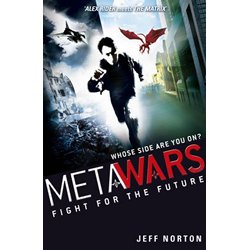
The EDGE welcomes author Jeff Norton and congratulates him on his debut novel METAWARS

I’m blessed and cursed with an exceptional long-term memory and a terrible short-term one. Ask me what I did yesterday, and I’ll struggle to give you an accurate answer. Ask me about 10th grade (age 15), and I can give you a full run-down on what subjects I studied, where my locker was, and who I had a crush on (no, I’m not telling!). 

It’s an annoying trait in day-to-day life, requiring me to constantly write down little notes so that I don’t forget things, but it’s a great resource in crafting fiction for teen readers!

My new book, METAWARS: FIGHT FOR THE FUTURE, is set thirty years in the future, in a post-peak-oil London where two teenagers get swept up in the battle for control of the internet. It may be set in a ‘dystopian’ future, but the emotional spine of the story is ripped straight from the past, from my teenage memories.

People who say that high school is the best time of your life are either lying or have grown into adults they don’t want to be. Being a teenager is hard. I remember, vividly. High school can be a nasty equivalent to prison, nature plays lots of cruel jokes on your body, and the adult world isn’t ready to take you seriously yet. Please trust me when I tell you, and I’m sure the fantastic Edge authors would agree: it gets better.

My ambition with METAWARS was to extrapolate the chaos of teenage reality in an exciting, action-packed thriller set in a dangerous future world. My two lead characters are Jonah and Samantha (Sam), two at polar opposites of the teenage spectrum. Jonah is young for his age - I’ve painted him as a sheltered, quite naïve fifteen - while Sam is a bit older yet far more worldly and experienced. 

Jonah lives under curfew on a retired London bus (no more oil means no more bus routes) while Sam spends her nights blowing up buildings. The emotional story arc over the four books charts the development of their interdependency and contrasts Jonah’s growing maturity with Sam’s gradual climb-down from fundamentalism. When we first meet these characters, they are both incredibly certain about their views on the world. Only through their adventure together do they realise that the world is a far more complex place than they ever imagined.

I believe that the awakening from childhood to adulthood, the awkward phase we call ‘teenager’ is humanity’s most profound experience. It’s painful (growing pains!), physically awkward (spots anyone?), and emotionally fraught (frienemies, crushes, first loves), but it’s the crucible that turns children into adults. It’s fertile ground for fiction and I remember it well.


Jeff Norton is the author of METAWARS: FIGHT FOR THE FUTURE, published 2 August 2012 from Orchard Books.

Find him on the web at  www.jeffnorton.com, ‘like’ him at www.facebook.com/thejeffnorton  or follow him on twitter via www.twitter.com/thejeffnorton

Friday, 31 August 2012

AN OLYMPIAN'S 'JOURNEY'


Paula Rawsthorne looks at what we can learn from the Olympics about storytelling.

I’m writing this when the Olympics is still in full swing and my household is in the grip of Olympic fever. This involves my family watching hours of coverage on t.v, interspersed with heading outdoors to engage in bursts of sports before returning to scream at the screen.  We started bidding for tickets as soon as they were released and were lucky enough to spend a day in the Olympic Park were we watched the women’s hockey.  We also stood on tip toes in Hyde Park with 250,000 other spectators, marvelling at the men’s triathlon.  We cheered and clapped until our hands were sore as we watched the fabulous Brownlee brothers take gold and bronze.  The whole Olympic experience was joyous and inspiring.  The organisation was a triumph.  The atmosphere in the stadiums and crowds was uplifting.  People were good natured, smiley and friendly.  Everyone seemed to be loving this, once-in-a-lifetime, shared experience.

The London 2012 Olympics will live in my memory for its many spectacular sporting feats by Usain Bolt, the Team GB rowers and cyclists, Mo Farah, Nicola Adams, Jade Jones, David Rudisha (too many to name). We’ve witnessed heart stopping drama and the wonderful spirit of the athletes, spectators and volunteers and, of course, the incredible, funny and moving opening ceremony masterminded by the dream team of Danny Boyle and Frank Cottrell Boyce.

However, it doesn’t seem enough to just watch these world class athletes at the top of their game.  We want that extra dimension, we want to know their STORY and, in true X Factor tradition the  journalists and presenters covering the games have created, for the viewer,  their versions of each athlete’s ‘Journey’.  They assume that we want to know about the personal trauma and adversity that the athletes have had to overcome in their ‘journey’ to the Olympics. They assume we want to hear stories of heart ache, bereavement, star crossed lovers, the come- back kids, the troubled teen saved by sport, the Sudanese former child slave (Guor Marial) who has overcome unimaginable suffering and has made it to onto the Olympic stage.

Whether we love or loathe the culture of the ‘journey’, these stories help us to empathise with the Olympians and empathy is a most admirable human characteristic. Feeling a connection with these athletes makes us want to root for them (even if they aren’t from Team GB).  It brings out the best in us.   So, when we see a down to earth young woman, from an ordinary background, win Gold in the Heptathlon, it makes our hearts swell with pride.  It may even make some girls feel that great achievements are not beyond them, given hard work, determination and discipline. I would love to believe that even one teenage girl may now aspire to be like Jessica Ennis instead of a Big Brother contestant.

We’re not so interested in hearing about athletes with trouble free ‘journeys’.  It’s much harder to work up a passion for an Olympian born with a silver spoon in their mouth, who has won every important competition without trauma, who lives in a world of privilege that means that losing won’t have a big impact on their charmed lives.  No, we naturally enjoy stories that involve people rising above adversity, fighting every step, overcoming whatever obstacle is put in their way:  We love tales where the stakes are so high that the athletes compete like their lives depend on it and to have a nemesis in the mix makes it even more appealing (Victoria Pendleton has Anna Meares).

So what has all this got to do with writing?  Well, I think what we’ve seen over the Olympics has a lot to teach us about storytelling and the universal importance of story.   When we write, the journey of our hero/ine needs the elements displayed by the most engaging stories of the Olympians.  Firstly, we need the reader to empathise and connect with our hero (even if our hero happens to be an alien). We need to see our hero battling and, eventually, overcoming obstacles as they strive to reach their goal.  Our stories need drama, pace, conflict, high stakes.   We need to take the reader on a rollercoaster ride of emotions as they cheer on our hero towards some kind of triumph, against all the odds.  Oh, I’m welling-up just thinking of it- I’d better get back to the t.v. and cheer on more  Olympians!

Friday, 24 August 2012

Shattered Dreams: Lessons Learned

Ellie James, author of the mystical Midnight Dragonfly series featuring teenage psychic Trinity Monsour, joins us today to preview her YA thriller, Shattered Dreams.

 Life as a psychic can be rather bizarre, especially when you’re sixteen and living in the most haunted city in America, when everyone in your life was a stranger six months before, when secrets lurk around every corner and every now and then you have these….dreams. Dreams you don’t understand. Without time- or place-stamps. Dreams that terrify.

Dreams that come true.

Oh, yeah, and the wrong guy has a way of showing up at exact the right moment.

Here’s a peek at a few lessons Trinity learns along the way….
1.      Not all dreams end when you wake up.
2.      The truth can be far more dangerous than a dare.
3.      Being on the outside looking in is sometimes far better than being trapped on the inside.
4.      Seeing things that aren’t there doesn’t always mean you’re crazy.
5.      A smile can be the most dangerous disguise.
6.      Nothing is random.
7.      Sometimes when you close your eyes, you can see significantly better than when they’re open.
8.      Silver is far more than a color.
9.      Just because you don’t remember something doesn’t mean it didn’t happen.
10.  Opening your eyes in the wrong guy’s arms isn’t always…wrong.
11.  Morgues aren’t fun places.
12.  The soul remembers.
13.  Once open, some doors can never be closed.
14.  Only a coward lets fear stand in their way.
15.  A single kiss can change everything.

About the Midnight Dragonfly Series
The firstborn daughter, of the firstborn daughter, of the firstborn daughter, sixteen year old psychic Trinity Monsour has a connection to the Other Side. She knows secrets and truths she shouldn’t, feels emotions that do not belong to her, and see events that have yet to happen. They come to her as glimpses, shadowy, disjointed snapshots that flicker through her dreams. Some terrify: a girl screaming, a knife lifting, a body in the grass. But others--the dark, tortured eyes and the shattering kiss, the promise of forever--whisper to her soul.

They come without warning. They come without detail.

But they always mean the same thing: The clock is ticking, and only Trinity can stop it.

Find out how in Shattered Dreams, available from QuercusKids!

About Ellie James
Most people who know Ellie think she’s your nice, ordinary wife and mom of two young kids. They see someone who does all that normal stuff, like grocery shopping, walking the dogs, going to baseball games, and somehow always forgetting to get the house cleaned and laundry done.

 What they don't know is that more often than not, this LSU J-School alum is somewhere far, far away, in an extraordinary world, deeply embroiled in solving a riddle or puzzle or crime, testing the limits of possibility, exploring the unexplained, and holding her breath while two people fall in love.
Regardless of which world Ellie’s in, she loves rain and wind and thunder and lightning; the first warm kiss of spring and the first cool whisper of fall; family, friends, and animals; dreams and happy endings; Lost and Fringe; Arcade Fire and Dave Matthews, and last but not least…warm gooey chocolate chip cookies.

Friday, 10 August 2012

Summer Lovin'


Edge Author Katie Dale reflects on the books that defined her teenage summers

“When I look back now those summers seemed to last forever…”

Summer holidays feature heavily in teen fiction – they’re an escape from the regimented timetables of school and homework, a chance to travel, see new places, meet new people, have summer flings, and quite often they’re life-changing. And usually they’re hot and sunny!

Books like these make perfect summer holiday reading, whilst the holidays themselves allow the freedom to indulge - endless hours of free time meant a big trip to the library at the beginning of the holidays when I was younger, returning with a stack of books to be devoured at leisure wherever the summer took me. 


Whether lying in the sun, waiting at an airport, travelling, or curled up inside with the rain pouring down, books transported me to all sorts of weird and wonderful places every summer - having wonderful adventures and lashings of ginger beer in Dorset with The Secret Seven and Famous Five; falling in love in California with the Sweet Valley Twins and Judy Blume; summers of self-discovery with Caroline B. Cooney, Sarah Dessen, and Paula Danziger, tension-filled summers with Anne Cassidy - I could go anywhere at all, safe in the hands of a good book. 

What are/were your favourite summer reads growing up, and why?


Thursday, 2 August 2012

Setting up Strange Chemistry, by Edge guest Amanda Rutter

So much has been said recently about how the publishing industry, faced with a double-dip recession, closing bookshops and competition from ebooks, is struggling.  Edge member Savita Kalhan was recently impacted when her publisher closed down not long after she had signed a contract with them.

Yet, despite what at first glance appears to be an inhospitable environment, in the latter half of this year not one, but two imprints are launching.  Hot Key Books is Bonnier's children's publisher and their first books are in shops today.  Strange Chemistry is a global imprint dedicated to the best in modern young adult science fiction, fantasy and everything in between, they are related to Angry Robot and will be launching their first titles on the 4th September.

Knowing that two publishing houses are launching imprints into the choppy seas we all face right now, is, frankly, inspiring, especially as the confidence they are showing is in the genre and age group focused on by the Edge.  We were really excited then, to have Amanda Rutter, the Strange Chemistry editor, do a guest post for the Edge on the subject of setting up a new imprint. 

Over to you, Amanda ... 


The process of setting up Strange Chemistry was a mix of old and new, of experienced and naïve. I say this because I (that would be Amanda Rutter, editor of Strange Chemistry) was completely brand new to publishing, having been a qualified accountant for the last ten years, while Marc Gascoigne (my publishing director and head honcho of Angry Robot Books, the SF/F adult imprint) has years and years of publishing experience. I think it’s a mix that has worked pretty much perfectly, despite some circumstances where I found myself whinging ‘Why can’t I do it like that?’ and ALWAYS complaining about the length of time that anything took in publishing!

One of those things that took a LOOOONG time was the naming of Strange Chemistry. I found out that I had the job in early October, but we didn’t hit on the best possible name for the imprint until just before I was announced in November 2011. I wrote a whole blog post about how we came about the name and some of the ones discarded: http://strangechemistrybooks.com/2011/11/21/whats-in-a-name/ I never dreamt how important it could be to find the right name – and how deathly difficult it would be!

According to Marc, the principal parts of setting up an imprint are the importance of the name and deciding on the way in which you want to brand your novels. For Strange Chemistry, the branding is to create timeless stories, to twist old and new into something very special. This is captured by the tagline of the imprint: “Experimenting with your Imagination.” YA is known for being fairly trend-driven, with both paranormal and dystopian enjoying great success. With Strange Chemistry I’ve been deliberately pursuing novels that don’t follow trends particularly, and I’m hoping that the buying public support these fresh and unique choices!

In terms of the practical part of setting up Strange Chemistry, the first few weeks involved a LOT of emails and phone calls. I had to field queries from agents about what kind of manuscripts I was looking for; I made contact with prominent bloggers to see whether they wanted to be part of the new Strange Chemistry mailing list; I talked an immense amount about books. And I loved EVERY minute!

We also had to sort out a logo that would fit both onto websites and onto the book covers, and we had to establish a website/online presence. When it came to this I decided early on that I would like to embrace as many facets of YA as possible, rather than just focusing on selling the Strange Chemistry books. I wanted to create a dialogue and a community who enjoyed being involved and seeing this imprint being built from the ground up. As such, the website has featured blog posts that highlight YA people should be picking up as a matter of interest (http://strangechemistrybooks.com/category/you-should-be-reading/) and also posts from YA bloggers about why we should be reading particular series (http://strangechemistrybooks.com/2012/07/19/introducing-the-iron-fey-series/)  We’ve also tried to generate an active Twitter, Facebook, Goodreads and Pinterest presence – we know just how important it is to be in touch with the readers. With so many books available to buy every month, if readers don’t even know about our books, then we’re not doing the job right! 

I think what has been the very strangest part of launching Strange Chemistry (and probably any imprint!) is that we are still a month away from our first books being released. It’s been eight months of hard work – finding new authors and contracting with their agents; editing the novels that are coming out this year; art briefing the covers and making sure they are introduced to the wider world in an effective manner; talking to reviewers and securing possible reviews – and yet we haven’t seen any of the books out in the wild yet! Not long now, though, and I know everyone involved in Strange Chemistry is keeping their fingers crossed that we’ll make a splash.


With thanks to Amanda - I am confident that Strange Chemistry will make a splash - all the titles are already on my reading list (in fact I've already read two of them, sneaky I know) and on a personal note, the website is excellent, I think Strange Chemistry have really hit on the atmosphere of the YA industry - mutually supportive, educational and interesting.  


If you would like to follow Strange Chemistry their Twitter is @strangechem
And their Facebook is https://www.facebook.com/strangechemistry


Strange Chemistry is currently only accepting manuscripts from agented authors.