Friday, 28 December 2012

2012 Review: Books, Libraries and Writing – A Year on The Edge

In the final blog post of 2012, Edge author Dave Cousins takes a look back over a few highlights from the last twelve months at the Edge.

The year started with a flurry of Edge books hitting the shelves: Sara Grant's Dark Parties, my own 15 Days Without a Head, plus Someone Else's Life and the first two titles from the Fairy Tale Twist series from Katie Dale. January also saw the first of two guest posts by Caroline Green.

As the year draws to a close, I'm sorry to have to write that our national library service is still in a perilous state. The current government seems either unaware or ambivalent to the vital role libraries play in society and has done little to stop closures and reductions in services across the country. To mark National Libraries Day in February, each of the authors at the Edge wrote a short piece in support of libraries.
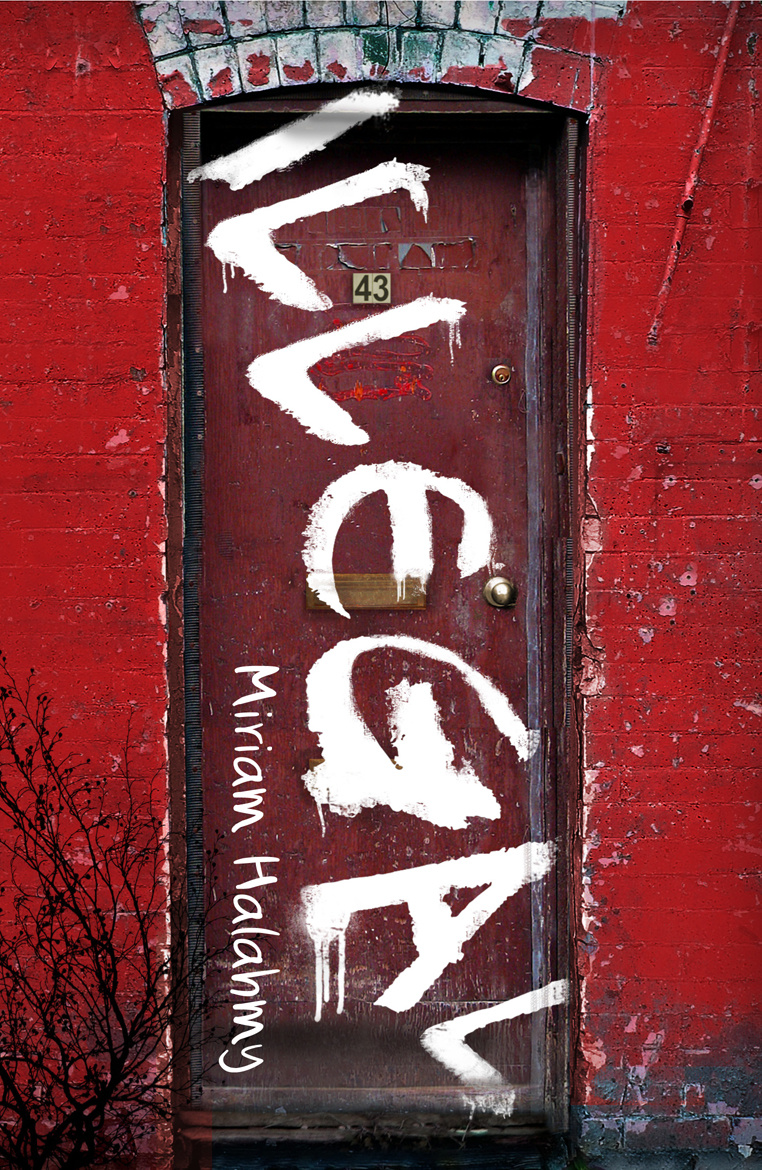
March saw the publication of Illegal – the second book in Miriam Halahmy's trio of books set on Hayling Island. Author Mary Hoffman wrote: "Miriam Halahmy has pulled off a difficult trick - a second novel as good as her first."

During events we are often asked for writing tips, so in April the Edge scribes each offered a nugget of wisdom we hoped might be useful to fellow writers young and old.
Late Spring saw a trio of fine authors guesting at the Edge. We were delighted to welcome Nik Perring, Jane McLoughlin and Conrad Mason. If you missed their posts the first time around, here's a chance to catch them again.

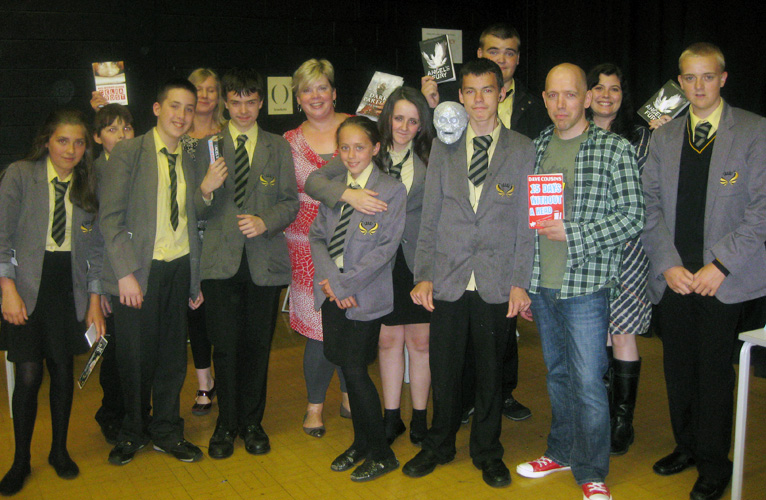
Edge authors and the My Voice Libronauts in Warrington

The Edge Summer Tour kicked off with a trip to meet the My Voice Libronauts in Warrington. This was followed by events in Blackheath, Hounslow and Westminster. The final date saw Dave and Sara performing a double-act of live storytelling at the Edinburgh International Book Festival in August.

We are keen to have a wide variety of voices at the Edge, and were pleased to invite a quartet of book bloggers to give their perspective of teen and young adult fiction. Read what Paula from PaulaSHx, Beth from Page-TurnerCicely from Cicley Loves Books, and Jeremy from Book Engine had to say.

September saw the publication of Another Life – the eagerly anticipated third book in Keren David's trio of urban thrillers that started with the acclaimed When I was Joe. More good news followed, with the announcement that new Young Adult imprint Strange Chemistry will be publishing Bryony Pearce's The Weight of Souls in the UK and US in August 2013.

We rounded off the year with A Night on the Edge at Foyles bookshop in London, in association with Foyles and the Youth Libraries Group, plus an impressive line-up of  award-winning guest authors: Ruth EasthamCelia Rees and Anne Cassidy.

Paula and Bryony at the Leeds Book Awards
We are delighted that a number of books by Edge authors have been recognised with award nominations in 2012. These include: SCBWI Crystal Kite (Dark Parties, winner); Cheshire Schools Book Award (Angel's Fury, shortlisted); Leeds Books Award (Angel's Fury, winner 14-16 category  and The Truth About Celia Frost, winner 11-14 category); Anobii First Book Award (15 Days Without a Head, Dark Parties, Someone Else's Life, all shortlisted); Sefton Super Reads Award 2012 (The Truth About Celia Frost, winner); Branford Boase (Angel's Fury, nominated); Carnegie Medal 2012 (Hidden and Lia's Guide to Winning the Lottery, both nominated)

Finally, a huge thank you from everyone at the Edge for your support, for visiting the blog and leaving comments. We hope to see you again in 2013.

Happy New Year!

Friday, 21 December 2012

Examination Blues by Keren David


January is on the way, and that means exam time for thousands of British teens. These are closely followed by exams in May and June. School years 11,12 and 13 covering the ages 15 to 18, are dominated by external examinations.

As a writer of contemporary teen novels, this unrelenting load of exams is a complete pain. How can my teen protagonists have a social life, have adventures, do interesting things when they’re working so hard?  My latest book features two clever sixthformers, with their sights set on Oxbridge. How to give them time to get to know each other amid all their essays and revision?

What’s more, Michael Gove plans to change everything. Do I write about GCSEs and A levels, or try and pre-empt the eBacc, which is due to come in in a few years time…if it goes ahead? If I put a line in the musical I’m writing about Drama GCSE is that going to date instantly?

There are various approaches to the problem that I’ve noticed recently.  Some writers talk about GCSEs, but it's clear they think of them like old-style O levels….two years of study and then an exam at the end. Others transform the British system into something much more American (Night School by CJ Daugherty takes this approach to the point where there’s a reference to Headmaster Rowe – it doesn’t stop the book being very entertaining and compelling ). Others throw in a reference or two to coursework, or free their teens from the classroom somehow -  in my most recent book, Another Life, both narrators have dropped out of school by the end. In Rockaholic, C J Skuse writes about a teenager who has left school at 16.

Watching my own children going through the British school system I feel they are ridiculously overloaded with tests, they make life-changing changes too early and, after this year's GCSE debacle, I have no faith in the fairness of the system or the people meant to enforce it. I agree with those who say that our kids don’t need exams at 16. It’d be a bonus for me as a writer as well.


In the meantime, I'm considering writing about kids at international schools, alternative schools, home-schooled kids, kids with school phobia, kids with careers and home tutors. What's your solution?


Friday, 14 December 2012

Fear and the First Draft

I’m coming very close to the end of the first draft of Hell Wood, my current WIP. Hurrah! But wait a minute... It’s only a first draft. I will type those precious words, THE END, when I get there, but one thing is for absolute sure – it won’t feel like the end. In fact, it will feel as though I’ve only just begun the journey. Even as I’m writing it, I’m thinking ‘Is it good enough? Is it as good as it can get? Have I told the story well? Or is it a pile of drivel?’ It’s better not to question it too closely if that hinders your progress, although sometimes that’s quite a difficult thing not to do! What’s important to constantly remind yourself of is getting the first draft down on paper. Then you can worry!
I will leave the first draft in a drawer for a couple of weeks, resisting the temptation to take it out and read it only by keeping myself ridiculously busy doing other things. But I know from experience that taking that step back from a story that has consumed your every waking hour, is an absolute must. It’s better to leave it even longer than two weeks, but, at least for me, that’s never going to happen!
Then I get the manuscript out to read and I approach it with those familiar feelings of fear and dread, and those self-doubting questions: Is it going to be awful? Is the voice clear? Does the story have a good arc? Is it gripping, absorbing? Etc, etc, etc!
It’s very, very unusual for a first draft to be dead on target, ready to be read a final time before being sent off to your agent or publisher. It’s only ever happened to me once and I doubt it will again.
Of course my “first draft” has been read and edited as it’s being written, and once the book is finished that process will begin again, and go on and on until I’m happy with the book in its entirety. The process may begin again when I’ve had feedback from readers, my agent, and my publisher... Basically it’s never over until the ink is drying at the printing press.
Then it’s the end.
But I’m not quite there yet and I’m panicking. It’s too close to the Christmas holidays. I can’t afford to take a week off because I might lose the plot, in the literal sense, and I don’t want to be the party bore who lugs her laptop around like a chain and ball! Instead, I’ve decided to write the last few chapters into a notebook by hand – something I always used to do a few years ago, but not recently. I’ll let you know how I got on in the New Year!
Happy holidays!

Saturday, 8 December 2012

Writing and Revealing -- the Striptease of Fiction

Sara Grant, author of Dark Parties, discusses the conscious and unconscious act of writing


I’m a compulsive list-maker. I never met at matrix I didn’t like. And, spontaneous is not my middle name nor really a welcome word in my vocabulary. (My best friend once suggested that I needed to plan to be more spontaneous – now that sounds like me!)
            When it comes to writing, I proudly declare that I’m a plotter. I whole-heartedly agree with Albert Zuckerman, author of Writing the Blockbuster Novel: “No sane person would think of setting out to construct a skyscraper or even a one-family home without a detailed set of plans. A big  novel must have the literary equivalent of beams and joists strong enough to sustain it excitingly from beginning to end, and it also must contain myriad interlocking parts fully as complex as those in any building type.”
            But I’ve learned to leave room for surprises. I do all my plotting homework but, when I sit down to type the words into my computer, I let my unconscious weave a tale among my well-placed mile markers. I love it when my characters suggest a new path that I seemed to have unconsciously cleared.
            At both the plotting and revision stages, I will create charts and graphs examining character arcs and plot points. There will be Post-it notes and highlighters, coloured pens and sometimes Crayons.
            Even after all this careful analysis, I’m still surprised by my own fiction. When I, at last, read my story in printed form without pencil in hand, I often find that I’ve given away more of myself than I intended.
            I heard Hilary Mantel speak about her memoir Giving Up the Ghost. Someone asked if it was odd to have complete strangers know so much about her life from her memoir. She said something like: in a memoir she controls what her readers know about her life, but in her fiction she unconsciously reveals so much about herself.
            My debut novel, Dark Parties is, in part, a tribute to my grandma. My main character Neva’s grandma is basically my dad’s mum. I wanted to, in some small way, capture my grandma on the page and immortalize this wonderful woman who meant so much to me.
            I also don’t hide my feminist leanings. I endeavour to write strong female characters who are more than a love interest. In Dark Parties, it’s the women who lead the rebellion. In my next book Half Lives, it’s a young teen girl who must re-build civilization.
            And I sometimes sneak in first or last names of friends and family. It’s sort of a wink to their significance in my life but it’s also a funny way to detect who has actually read the book.
            But then there are these other influences that come shining through only after I’ve signed off on the final proof. For example, in the first few lines of Dark Parties, Neva says that her father would finally be proud of her. It’s a small, but significant, thread that runs right to the end of the story. It wasn’t one that was planned but one that was cultivated when it appeared in the first draft. At the time I began to write Dark Parties, my father had been diagnosed with cancer. He is alive and well, but at that time I was struggling with being so far away from my family. (I’m an American living in London.)
            You learn a lot about yourself while you're crafting a story. You take the time to ponder things like the meaning of love, diversity, identity, religion and, well, life. It’s cheaper than a psychiatrist. But having your novel published for all the world to see sometimes feels like dancing a striptease at a literary festival. (I suppose it's the writerly equivalent of my teen stress dream where I walk through high school naked.) 
            I’ve just received few advance reader copies Half Lives and distributed them to select friends and family members – so the dance begins again. I wait with excitement and anxiety at what they might find between the pages. I hope they enjoy the dark and tangled thriller I’ve created. (One friend as already commented: “so strange that such a cheery person could write something so dark.”) The book’s political and religious commentary is completely intentional. But I’m nervous about what has slipped in, what I’ve revealed unintentionally.
           This type of unconscious exposure is not unique to writers. You can learn a lot about someone based on what he/she reads. No two people read a book and hear the exact same story. I realize I haven’t written one book I’ve written thousands – the one that I intended to write, the words that end up printed on the page and then the story each reader takes away. I’m often astounded by what readers discover in the pages of my book.
            What do the books you write and read reveal about you?


Sara Grant's second teen novel Half Lives will be published in May in the UK and July in the US. Learn more about Sara and her books at www.sara-grant.com or follow her on twitter @authorsaragrant.

Friday, 30 November 2012

How Far Can You Go in Young Adult Fiction? by guest author Anne Cassidy

Another treat for you this week, as we welcome award-winning author, Anne Cassidy, as our guest at The Edge.

I’ve been writing young adult fiction for over twenty years. My first book was about a violent murder and it involved teen pregnancy/sex/pornography/love. It was called Big Girls’ Shoes (a line that was triggered by an Elvis Costello song, Big Sister’s Clothes). It didn’t sell many copies but it did lay down a kind of template for the books I was going to write.

Since then I’ve written about thirty young adult fiction novels. I’m best known for Looking For JJ, a story about a ten year old girl who killed her friend and was sent to a secure unit. She is released when she is seventeen and the story is about how her life is shaped by what she did when she was ten. This book has violence/pornography/love and lots of other things.

The question of how far you can go is, for me, a matter of taste rather than censorship. My books deal with dark things, adult things and I make no apology for writing them for a teenage audience. When I was a teenager I was desperate to get my hands on adult novels (the more risqué the better) to find out what was really going on in the adult world. I hated the way I was excluded from things in that world. I was expected to be grown up and sensible at school but when it came to knowing what was going on, about life as it was lived, then I was kept in the dark because of my age.

So I would cover just about any dark subject for a young adult audience. The way in which I would cover it would reflect the kind of books I like to read. For example I’ve read a range of serial killer/torture chamber/gore books and frankly I find them laughable. So if I’m writing about a murderer who kills young girls I will have a lot of the violence off camera so to speak. Not because I’m worried that librarians won’t buy my books but because I think it’s better to leave some stuff to the imagination. How scary the film Alien was for NOT seeing the creature. Also The Blair Witch Project. It’s the old saying LESS IS MORE and this works so perfectly for young adult fiction.

The same goes for sex. I like to have sex in my books. My memories of being a teen involved thinking about sex an awful lot (although not doing very much). So any account of teenage life has to have sex in it. However I don’t want readers cringing at sex scenes so I leave a lot of it unstated. I hint, I imply. The unclasping of a belt or the unbuttoning of a shirt might be enough. I think we all know what will happen next.

The main reason that I try to be honest in my storytelling is because I thinks young adults demand it in a way that no other group do. If you try to peddle some made up version of what teen life is like (or what some people wish it was like) you’ll get found out by your readers. They’re a sharp lot. It takes them a long time to pick up a book to read but only a second to put it down again.

Anne Cassidy’s new series THE MURDER NOTEBOOKS begins with Dead Time, which has been nominated for the 2013 Carnegie Medal
The second of the series Killing Rachel will be out in March 2013.

To find out more about Anne and her books visit www.annecassidy.com.

Finally, thanks to Anne for being this week's guest author at The Edge.

Friday, 23 November 2012

The Edge, an uncomfortable place to be … by guest author, Celia Rees

This week we are delighted to welcome award-winning author, Celia Rees as our guest at the Edge.

I have to thank Miriam Halahmy for introducing me to The Edge and asking me if I’d like to contribute to a site devoted to ‘Sharp fiction for young adults and teens’. I have always believed that there is a place for just this kind of fiction, positioned between children’s books and fully adult writing, offering a staging post, a stepping stone between the two. It is a vitally important, necessary fiction, but a tricky area. The Edge can be an uncomfortable place. Get it WRONG and you will be accused of preaching, patronizing, being out of touch in an embarrassing ‘Dad Dancing’ way. Get it RIGHT and you might delight the readers but dismay the gatekeepers and risk not being published at all.

Tricky lot, older teens.

I began writing as a response to just this difficult group. I was an English teacher and my 14 – 16 year old students seemed to have turned themselves off reading because, they said, there was nothing for them, nothing that reflected life as they experienced it. They were almost adults, but the fiction on offer did not treat them that way. There wasn’t much to intrigue, engage, engross them on a grown up level. This didn’t mean that they read nothing. 
There were authors they consumed with great appetite. American authors like Robert Cormier, Lois Duncan, Patricia Windsor and Ursula Le Guin but their output was relatively small and when these readers wanted to, they could read fast. It seemed to me that what these writers had in common was an ability to write exciting, genre fiction with teenage characters at the centre of the action but with added value. These books were uncompromising, not just in subject matter but also in the complexity of the story telling, the way they were written. I liked that. I enjoyed reading these books myself and that is still my test. If I enjoy the book as an adult reader, it is YA. If I don’t. it’s not. A rough rule of thumb, biased I know, but there it is.

My first novel, Every Step You Take, was based on a true story about a group of students from another comprehensive school in the city who got mixed up in a murder hunt. I wrote it like a thriller because I knew that was a popular genre (and I like thrillers) but it had ‘added value’: strong themes - a continuum of male violence from date abuse and rape to murder and powerful female characters (these were the days of early Val McDermid and V.I. Warshawski).

My latest novel, This Is Not Forgiveness, is also a contemporary thriller, taking in events happening now, soldiers returning from Afghanistan, post traumatic stress disorder, other kinds of social disorder, all mixed into the complexities and stresses of 21st Century teenage life. I’ve written in a lot of other genre, notably historical fiction and horror, but I’ve always kept those first principles in mind: strong stories, added extras, keep it real, be honest, don’t patronize. Even with all that, you still might not get it right…

The Edge can be a difficult place and uncomfortable, but then how comfortable should it be?

For more information please visit Celia's website, her official Facebook Fan Page, or follow her on Twitter @CeliaRees

Huge thanks to Celia for being this week's guest author at The Edge.

Friday, 16 November 2012

I'M NOT READING THAT!


Paula Rawsthorne asks, 'Do teenagers self-censor their reading?'
 
  
Recently I heard something from a group of librarians that got me thinking.  There was a discussion about boundaries in YA fiction and a librarian said that, in her experience, teenage readers tend to self-censor.  So, for instance, if they started reading a story and found the content too violent, too scary, too sexually explicit, they will put it down and move on to something else.
 
I was heartened and rather surprised to hear this but wondered how widespread this could be.   I presume (maybe incorrectly) that younger children routinely self-censor.   I imagine they stop reading a book if it upsets them, maybe because of a storyline that disturbs them (years ago one of my kids was particularly upset by a book about a rather menacing bear that hid in a cupboard under the stairs in the family’s house – no wonder he was upset!)  However, do teenagers generally behave in the same way?
I started to think back to my own reading habits as a teenager.   I read many entertaining, popular books as well as works of great literary merit, but, if I managed to get my hands on a wholly inappropriate book I, just like all my peers, was delighted.   Of course, we knew that we shouldn’t be reading these novels, they were invariably books marketed for adults (we didn’t have a separate YA category and it was the era of Jackie Collins and Jilly Cooper) and we knew that our parents certainly wouldn’t approve but, of course, this made these trashy books, even more alluring.   Although, in retrospect, I must have had some censorship skills as, even as a teenage reader, if I came across a load of nasty violence in a story I just skipped the offending pages. Also, the innate teenage feminist in me didn’t approve of simpering female characters dominated by beefy men and that would be a good enough reason to give up on a book, no matter how racy.   However, there was only one sure thing that would make me stop reading and that was if the story was boring and, according to my quick research, that reason is still No.1. 

 
You see, intrigued by this notion of teenagers self- censoring their reading, I decided to undertake a straw poll of, mostly, older teens.  I asked them (via their mums) had they ever stopped reading a book because the content was too much for them.  Now immediately you may feel that my poll is fatefully flawed as no teenager will give an honest answer to this question to their mum!  However, the answer in my poll was resoundingly, no.  Both the boys and girls questioned said that the only reason that they had ever stopped reading a book was if they found it boring.  They certainly weren’t put off by content that their parents might deem unsuitable.


Of course, all teenagers are different so I can’t generalise about self-censorship habits.  It would be wonderful if teenagers were self-aware enough to stop reading a book if they find the content upsetting or disturbing.  But teenage years are often spent pushing against boundaries, asserting independence (as long as you don’t have to cook or clean for yourself) and breaking a few rules.  Sometimes we only find out what our individual boundaries are by breaking them.  Maybe that’s why so many teenagers end up with their heads down the toilets at parties because they just don’t know when to stop drinking.  They may have to repeat this experience several times until they fully understood their boundaries (or was that just me) but it probably makes more of a lasting impression because they worked it out the painful way. 

So, can this theory be applied to choice of books?  Parents, teachers and carers set boundaries for teenagers because they care about them, not because they are a bunch of fascists.  That’s why they may not want them to have access to certain books.  They may take the time to explain why they feel a book is inappropriate, they may even confiscate books (I’ve done this before) but inevitably there will always be teenagers whose curiosity and resolve is only increased by talk of ‘inappropriate books’.  However, even if they end up reading the ‘unsuitable’ book cover-to-cover, some teenagers might discover that their parents were right (although they’ll never admit it) because the book has left them feeling queasy or sullied.  Or maybe they won't be able to make out what all the fuss was about and found the content all very tame (in which case, be worried!)

When we think of censorship, it’s usually because of depictions of sex, drug taking and violence but what about the question of whether teenagers ever self-censor purely because of the subject matter of the story, even when it doesn’t involve graphic sex and/or violence.  This is a whole different area (and needs a separate blog post) and also involves the issue of adults censoring  books for them because of controversial subject matters.  This area, for me, is far more complex and riddled with ethical questions than the thankless task of trying to keep ‘smutty’/violent books out of teenage hands.
If you’re a teenager I’d love to hear whether you’ve ever self- censored a book and why?  If you’re a parent or someone who works with young adults, what’s been your experience in this area?

Paula Rawsthorne is the author of the award winning novel The Truth About Celia Frost